Σάββατο 29 Οκτωβρίου 2022

Κυριακή 28 Αυγούστου 2022
Στον μαθηματικό Barry Mazur το “Μετάλλιο Chern”
Αναρτήθηκε σε 21 Ιουλίου, 2022 κατηγορία: Ειδήσεις | Tags: Barry Mazur, Mαθηματικά, Βράβευση, εκπαίδευση, Επιστήμη, Ιδέες
Ολόκληρο το άρθρο στο ΘΑΛΗΣ ΚΑΙ ΦΙΛΟΙ
Συντάκτης: Γιώργος Καρουζάκης
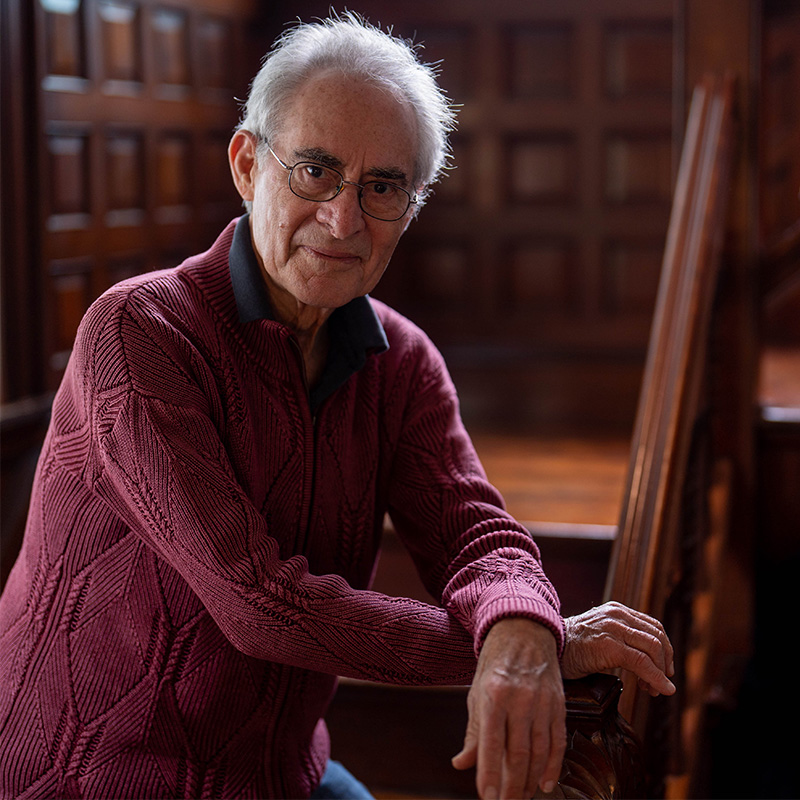
Barry Mazur | Photo credit: Lance Murphey
Στη συνέχεια των δημοσιευμάτων που αφορούν τις κορυφαίες διακρίσεις στον τομέα των μαθηματικών, και ανακοινώθηκαν πριν από λίγο καιρό στην τελετή της Διεθνούς Μαθηματικής Ένωσης στο Ελσίνκι της Φινλανδίας, αξίζει να αναφέρουμε τη σημαντική διάκριση που δόθηκε σε μία ξεχωριστή προσωπικότητα της μαθηματικής επιστήμης. Πρόκειται για την απονομή του φετινού Μεταλλίου Chern στον Αμερικανό μαθηματικό του Πανεπιστημίου του Χάρβαρντ, Barry Mazur. Το Μετάλλιο Chern απονέμεται κάθε τέσσερα χρόνια στο διεθνές συνέδριο της ICM, «σε ένα άτομο του οποίου τα εξέχοντα επιτεύγματα δικαιούνται το υψηλότερο επίπεδο αναγνώρισης στον τομέα των μαθηματικών».
Τρίτη 26 Απριλίου 2022
Anuraag Bukkuri
Anuraag Bukkuri, a PhD student in integrated mathematical oncology at the University of South Florida and Moffitt Cancer Center, will be the 2022 AMS Mass Media Fellow. He will spend 10 weeks this summer as a journalist for The Miami Herald, reporting on science and related topics.
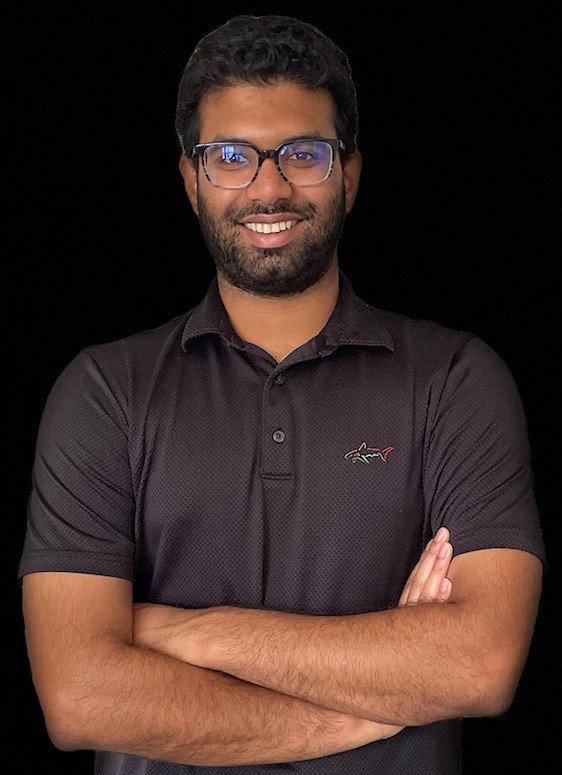
In his research, Bukkuri applies perspectives from mathematics, ecology, evolution, and Earth history to cancer therapies. He studied mathematics as an undergraduate at Dartmouth College and the University of Minnesota. Growing up, he wrote short stories and poems, but his interests in science and writing did not overlap at first.
"In more recent years is when I saw a big gap in the mathematical field for bringing our ideas, our passion for math, [and] the applications of math in the real world to the public,” Bukkuri said. In an article appearing in The Conversation last year, he described how evolutionary game theory could improve cancer treatment.
COVID-19, climate change, rising sea levels, the Everglades—all these scientific topics matter to the people of South Florida, Bukkuri said. He is looking forward to talking with local experts and using his training as a mathematician to write for Herald readers in a clear and methodical style.
Bukkuri is one of 28 fellows who will be embedded in newsrooms across the country this summer. “To join this group of truly distinguished people—not only in my cohort, but for decades—is truly an honor, and I hope to be able to learn from everyone over the years to come." After the fellowship, Bukkuri plans to pursue an academic research career while continuing to write.
About the Fellowship
Organized by the American Association for the Advancement of Science (AAAS), the Mass Media Science and Engineering Fellowship program improves public understanding of science and technology by placing advanced undergraduate, graduate, and postgraduate science, mathematics, and engineering students in media outlets nationwide. Fellows work for 10 weeks over the summer as reporters, researchers, and production assistants alongside media professionals to sharpen their communication skills and increase their understanding of the editorial process by which events and ideas become news. Now in its 47th year, the fellowship program counts over 750 scientists and science communicators as alumni. The AMS has sponsored a Mass Media Fellow most years since 1997.
Read more about this year’s class of Mass Media Fellows and see a list of past fellows supported by the AMS.
Contact: AMS Communications
*****
The American Mathematical Society is dedicated to advancing research and connecting the diverse global mathematical community through our publications, meetings and conferences, MathSciNet, professional services, advocacy, and awareness programs.
Πέμπτη 24 Μαρτίου 2022
Αποδέκτης του βραβείου για το 2022 είναι ο Dennis Parnell Sullivan
Εις το άπειρον: …and the Abel 2022 goes to… – Συλλέκτης Σωτήρη Χασάπη
...and the Abel 2022 goes to...

Ανακοινώθηκε και φέτος η απονομή του Βραβείου Άμπελ, που γίνεται κάθε χρόνο από τη Νορβηγική Ακαδημία Επιστημών και Γραμμάτων.

Αποδέκτης
του βραβείου για το 2022 είναι ο Dennis Parnell Sullivan από το
Πολιτειακό Πανεπιστήμιο της Νέας Υόρκης στο Στόνι Μπρουκ, "για τις
πρωτοποριακές συνεισφορές του στην Τοπολογία με την ευρεία της έννοια
και συγκεκριμένα τις αλγεβρικές, γεωμετρικές και δυναμικές πτυχές της".
Πηγή: The Abel Prize
Δευτέρα 3 Ιανουαρίου 2022
Πέμπτη 23 Δεκεμβρίου 2021
Richard P. Stanley receives 2022 Steele Prize for Lifetime AchievementAMS :: News from the AMS – Συλλέκτης Σωτήρη Χασάπη
Richard P. Stanley, an emeritus professor of mathematics at the Massachusetts Institute of Technology, will receive the 2022 AMS Leroy P. Steele Prize for Lifetime Achievement. Stanley has revolutionized enumerative combinatorics, revealing deep connections with other branches of mathematics, such as commutative algebra, topology, algebraic geometry, probability, convex geometry, and representation theory. In doing so, he solved important longstanding combinatorial problems, often reinvigorating these other fields with new combinatorial methods. Through his outstanding research; excellent expository works; and many PhD students, collaborators and colleagues, he continues to influence the field of combinatorics worldwide.
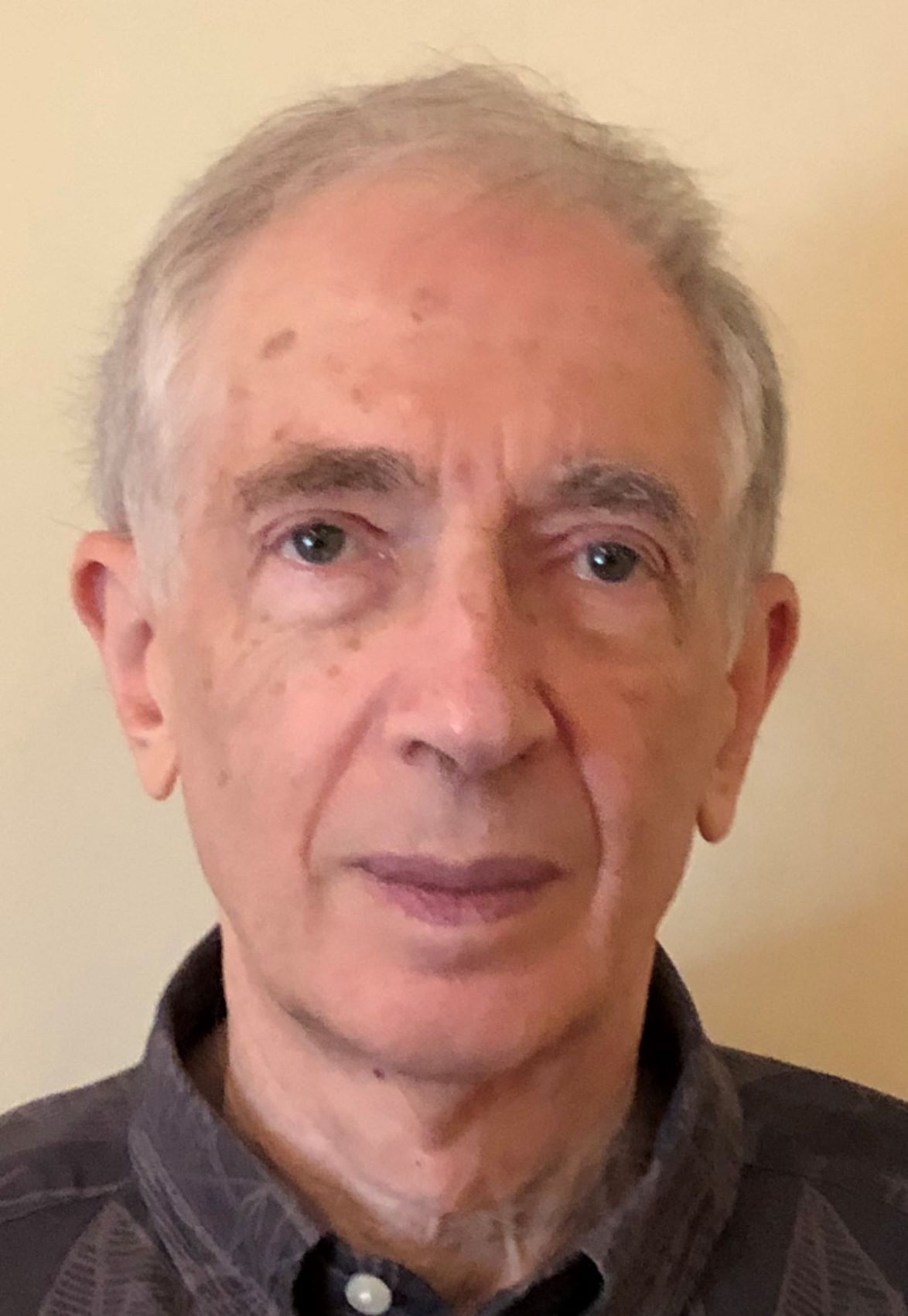
Response of Richard P. Stanley
It is a wonderful honor to receive the Leroy P. Steele Prize for Lifetime Achievement. When I started working in enumerative and algebraic combinatorics around 1967, I was greatly attracted to the vision of my thesis adviser Gian-Carlo Rota (recipient of a 1988 Steele Prize), who saw glimmerings of deep connections between combinatorics and other branches of mathematics. In graduate school, I became interested in partially ordered sets and symmetric functions. They fortunately turned out to be extremely fecund concepts which continue to fascinate me. I have described elsewhere how the problem raised by MacMahon of enumerating solid (3-dimensional) partitions eventually led me to find connections with convex polytopes, commutative algebra, and algebraic geometry, leading to the solution of a number of problems, such as the Upper Bound Conjecture for Spheres and the g-conjecture for simplicial polytopes, having nothing to do with solid partitions. It is interesting how the path to successful research can be so circuitous.
Throughout my career it has been gratifying to see many highly talented aspiring mathematicians decide to work in algebraic and enumerative combinatorics. Thanks to their efforts, the field has become vastly more sophisticated and intertwined with other areas than when I began my own research. This Steele Prize should be regarded not only as an individual honor, but also as a testament to the efforts of these other researchers who have raised algebraic and enumerative combinatorics to its present lofty level. I should also express my gratitude to the MIT Department of Mathematics for providing a stimulating and nurturing environment for learning, discovering, and teaching mathematics.
Biographical Sketch of Richard P. Stanley
Richard P. Stanley attended the California Institute of Technology as an undergraduate and received his PhD from Harvard University in 1971. He originally planned to work in algebra or number theory, but under the spell of Gian-Carlo Rota, he switched his main research interest to combinatorics. After postdocs at MIT and UC Berkeley, Stanley returned in 1973 to MIT, where he remained until retiring in 2018. He continues as an Arts and Sciences Distinguished Professor at the University of Miami during spring semesters. He especially likes connections between combinatorics and other branches of mathematics.
Stanley is a member of the American Academy of Art and Sciences and the National Academy of Sciences and a Fellow of the AMS. He was a plenary speaker at the ICM in 2006 and gave the AMS Colloquium Lectures in 2010. He received the SIAM George Pólya Prize in Combinatorics in 1975, the Steele Prize for Mathematical Exposition in 2001, and the Rolf Schock Prize in Mathematics in 2003. Sixty students received their PhDs under his supervision. In addition to these mathematical progeny, he has two biological children and two grandchildren.
About the Award
Presented annually, the AMS Leroy P. Steele Prize for Lifetime Achievement is awarded for the cumulative influence of the total mathematical work of the recipient, high level of research over a period of time, particular influence on the development of a field, and influence on mathematics through PhD students. The Steele Prizes were established in 1970 in honor of George David Birkhoff, William Fogg Osgood, and William Caspar Graustein, and are endowed under the terms of a bequest from Leroy P. Steele.
The 2022 prize will be presented Wednesday, January 5 during the Joint Prize Session at the 2022 Joint Mathematics Meetings in Seattle.
Find out more about the prize and previous recipients.
Contact: AMS Communications.
Δευτέρα 8 Νοεμβρίου 2021
George Bernard Dantzig
αν σήμερα,το 1914 γεννιέται ο μαθηματικός George Bernard Dantzig.
Γεννήθηκε στο Πόρτλαντ του Όρεγκον.Οι γονείς του,τον ονόμασαν George Bernard προς τιμή του Τζορτζ Μπερνάρντ Σω, του Ιρλανδού συγγραφέα. Ο πατέρας του Tobias Dantzig ήταν Γερμανός μαθηματικός και γλωσσολόγος της Βαλτικής και η μητέρα του, Anja Dantzig Γαλλίδα γλωσσολόγος.O George Bernard Dantzig υπήρξε μαθηματικός διαμετρήματος με περγαμηνές στην στατιστική, στην επιστήμη των υπολογιστών, την οικονομική επιστήμη αλλά κυρίως στην επιχειρησιακή έρευνα. Γνωστός για την εργασία του στο γραμμικό προγραμματισμό και ειδικότερα για την δημιουργία του αλγορίθμου Simplex, ενός αλγόριθμου για την επίλυση προβλημάτων γραμμικού προγραμματισμού.
Το 1939, ενώ ήταν μεταπτυχιακός φοιτητής στο Berkeley πρωταγωνίστησε στο εξής περιστατικό. Καθυστερεί σε ένα μάθημα, όταν φτάνει,ο καθηγητής Jerzy Neyman είχε ήδη γράψει στον πίνακα δυο προβλήματα στατιστικής, ο Dantzig υποθέτει ότι τα προβλήματα ήταν μια εργασία στο σπίτι και τα σημειώνει. Η αλήθεια είναι ότι τα προβλήματα όπως ο ίδιος μετέπειτα έλεγε «φάνηκαν να είναι λίγο πιο δύσκολα από το συνηθισμένο», αλλά λίγες μέρες αργότερα έδωσε ολοκληρωμένες λύσεις και τις παρέδωσε όπως πίστευε καθυστερημένα στον Neyman.
Έξι εβδομάδες αργότερα,πρωί,κάποιος χτυπούσε μετ’ επιτάσεως την πόρτα του Dantzig,όταν άνοιξε την πόρτα είδε ένα κατενθουσιασμένο καθηγητή Neyman,ο οποίος του είπε ότι τα προβλήματα που είχε λύσει ήταν δύο από τα πιο διάσημα άλυτα προβλήματα στην στατιστική.Είχε προετοιμάσει μία από τις λύσεις του για δημοσίευση σε ένα μαθηματικό περιοδικό.Όπως είπε ο Dantzig σε μια συνέντευξη του 1986,στο Journal College Mathematics: Ένα χρόνο αργότερα,όταν άρχισα να ανησυχώ για το ποιο πρέπει να είναι το θέμα της διατριβής μου,ο Neyman απλώς σηκώθηκε και μου είπε να ολοκληρώσω τα δύο προβλήματα να τα συρράψω και θα τα δεχόταν την διατριβή μου.
Αυτή η ιστορία άρχισε να εξαπλώνεται και πήρε διαστάσεις με το όνομα του Dantzig σιγά-σιγά να αφαιρείται και τα γεγονότα να αλλάζουν, αλλά η βασική ιστορία παραμένει με τη μορφή αστικού μύθου και έμπνευση για την εισαγωγική σκηνή στην εξαίρετη ταινία Good Will Hunting

πηγή: <iframe src="https://www.facebook.com/plugins/post.php?href=https%3A%2F%2Fwww.facebook.com%2Fthanasisdrougas%2Fposts%2F4104943336278637&show_text=false&width=500" width="500" height="485" style="border:none;overflow:hidden" scrolling="no" frameborder="0" allowfullscreen="true" allow="autoplay; clipboard-write; encrypted-media; picture-in-picture; web-share"></iframe>
Πέμπτη 15 Απριλίου 2021
Κυριακή 19 Ιανουαρίου 2020
Κυριακή 15 Δεκεμβρίου 2019
Jeffrey C. Lagarias
Jeffrey C. Lagarias
Cryptography, Discrete and Computational Geometry,
Dynamical Systems, Harmonic Analysis, Low-Dimensional Topology,
Mathematical Physics, Optimization
Courses Fall 2019
Undergraduate Math Club Fall 2019
Previous Courses
Schedule
Advisees (Ph.D.'s and Graduate Students)
Books and Papers
Talks-Slides
Talks-Videos
Professional Data
Notices of the AMS article with Chuanming Zong (pdf) ``Mysteries in Packing Regular Tetrahedra" ( Vol. 59, No. 11, Dec. 2012, 1540--1549)
Elizabeth Chen thesis defense (Ann Arbor Chronicle, February 14, 2010)
Last updated Sept 1, 2019 (links to papers before 1987 may be broken)
Research Interests:
Number Theory; also: Computational Complexity Theory,Cryptography, Discrete and Computational Geometry,
Dynamical Systems, Harmonic Analysis, Low-Dimensional Topology,
Mathematical Physics, Optimization
Last updated Sept 1, 2019 (links to papers before 1987 may be broken)
Κυριακή 31 Μαρτίου 2019
ΤΟ ΣΤΕΚΙ ΤΩΝ ΜΑΘΗΜΑΤΙΚΩΝ - Νίκος Χατζημανώλης
ΤΟ ΣΤΕΚΙ ΤΩΝ ΜΑΘΗΜΑΤΙΚΩΝ: Το blog αυτό φιλοξενεί απόψεις, σχόλια, άρθρα, δημοσιεύσεις και γενικότερα αναζητήσεις γύρω από τα μαθηματικά και τις επιστήμες.
Τετάρτη 12 Σεπτεμβρίου 2018
Σάββατο 8 Σεπτεμβρίου 2018
Κυριακή 10 Ιουνίου 2018
Σάββατο 28 Απριλίου 2018

Σάββατο 23 Σεπτεμβρίου 2017
Euler, the Beethoven of Mathematics - OpenMind
Euler, the Beethoven of Mathematics - OpenMind
In the educational studies of every scientist, there are a
few individual names that seem to emerge from course to course. But
above those of Newton, Galileo, or Einstein, there is
one name that probably surpasses them all as the first to appear—once
children master the four basic arithmetic operations, their approach to
logic begins with set theory and its Venn diagrams. But these are but
one particular case of those invented by a mathematician whose name
designates constants, functions, equations, laws, theorems, and almost
any other type of mathematical entity: Euler.
The Swiss Leonhard Euler (15 April 1707 – 18
September 1783) was one of the greatest intellectual supermen in the
history of mankind. The numbers serve to demonstrate his incredible
mental superpowers—over his 76 years of life he published more than 800
works, totalling some 30,000 pages. It has been estimated that almost a third of all the science and mathematics written in the eighteenth century bears his signature. After his death, his obituary required 56 pages to list all his publications.
But even the numbers fall short in describing a prodigious mind whose
talent manifested itself in some anecdotes. Perhaps the best known is
that he was able to recite Virgil’s Aeneid from beginning to end, detailing in what line every page of the edition he owned began and ended.
anticipate our current machines—his computing power was also superhuman.
He spent the last 17 years of his life almost totally blind,
due to a cataract in his left eye and a degenerative lesion in the
right one, whose origin varies according to the versions. But if this
disease affected his output, it was only to increase it; “in this way I
will have fewer distractions,” he once said. At one stage he was writing
an average of one work a week and joked about his enormous production,
claiming that his pencil outperformed him in intelligence. Like a
Beethoven unable to hear his music, Euler could hardly see his calculations,
but in his head he counted tables of lunar movements with such clarity
that an apprentice tailor could serve as a secretary without the need
for mathematical training.
 On one occasion, two students disagreed over the result of the sum of
17 terms in a series, as the results of the two operations differed in
the fiftieth decimal place. Without a pencil or slate, Euler computed
the correct result in his mind in a few seconds. The anecdote was
referred to by his contemporary and colleague, the Frenchman Nicolas de
Condorcet, who at Euler’s death wrote a lengthy eulogy to “one of the
greatest and most extraordinary men that Nature ever produced.”
Curiously, that genius might have been lost to mathematics if Euler
had followed in the footsteps of his father to serve as pastor of the
Reformed Church, as planned. The advice of the mathematician Johann
Bernoulli, a friend of the family, was key in directing Euler’s
footsteps definitively towards mathematics and science.
Precocious in his studies and in his career, he soon began to stand out, which led him to travel to occupy prestigious positions in the Academies of Saint Petersburg and Berlin.
The most prolific mathematician in history was not only the main
founder of what we now know as classical mathematics, exploring a wide
variety of fields and introducing much of the notation used today, but
he also explored other disciplines such as astronomy, optics,
engineering, magnetism, ballistics, navigation, shipbuilding, philosophy
and music. It is said that his musical theory did not triumph because
it was too advanced in mathematical computations for musicians, and too
musical for mathematicians.
dedicated himself professionally to teaching. Proof of this is the
publication that was a best seller in its time—Letters to a German Princess, On Different Subjects in Physics and of Philosophy,
a work in three volumes that began to be published in 1768 and that
collects the letters written by Euler to his pupil, Friederike Charlotte
of Brandenburg-Schwedt, princess of Anhalt-Dessau and niece of the King
of Prussia Federico the Great.
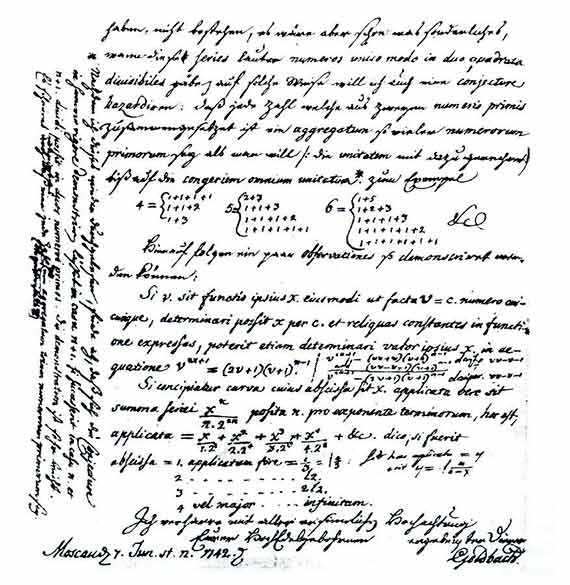 In fact, Euler’s correspondence is also a treasure trove—the famous
Goldbach Conjecture, one of the oldest yet unsolved mathematical
problems, first appeared in 1742 in a letter addressed to Euler by the
German mathematician Christian Goldbach, his friend since they met each
other at the St. Petersburg Academy.
It was in this Russian city that, on September 18, 1783, Euler was
calculating the ascent of hot air balloons—which at that time were
causing a furore in Europe—and argued over dinner with his colleague
Anders Johan Lexell about the orbit of the newly discovered planet
Uranus. As Condorcet wrote, it was later, while drinking tea and playing
with his grandson, when “all of a sudden the pipe that he was smoking
slipped from his hand and he ceased to calculate and live.”
Javier Yanes
Euler, the Beethoven of Mathematics
few individual names that seem to emerge from course to course. But
above those of Newton, Galileo, or Einstein, there is
one name that probably surpasses them all as the first to appear—once
children master the four basic arithmetic operations, their approach to
logic begins with set theory and its Venn diagrams. But these are but
one particular case of those invented by a mathematician whose name
designates constants, functions, equations, laws, theorems, and almost
any other type of mathematical entity: Euler.
The Swiss Leonhard Euler (15 April 1707 – 18
September 1783) was one of the greatest intellectual supermen in the
history of mankind. The numbers serve to demonstrate his incredible
mental superpowers—over his 76 years of life he published more than 800
works, totalling some 30,000 pages. It has been estimated that almost a third of all the science and mathematics written in the eighteenth century bears his signature. After his death, his obituary required 56 pages to list all his publications.
But even the numbers fall short in describing a prodigious mind whose
talent manifested itself in some anecdotes. Perhaps the best known is
that he was able to recite Virgil’s Aeneid from beginning to end, detailing in what line every page of the edition he owned began and ended.
Superhuman computing power
Memory was not the only ability in which his brain seemed toanticipate our current machines—his computing power was also superhuman.
He spent the last 17 years of his life almost totally blind,
due to a cataract in his left eye and a degenerative lesion in the
right one, whose origin varies according to the versions. But if this
disease affected his output, it was only to increase it; “in this way I
will have fewer distractions,” he once said. At one stage he was writing
an average of one work a week and joked about his enormous production,
claiming that his pencil outperformed him in intelligence. Like a
Beethoven unable to hear his music, Euler could hardly see his calculations,
but in his head he counted tables of lunar movements with such clarity
that an apprentice tailor could serve as a secretary without the need
for mathematical training.
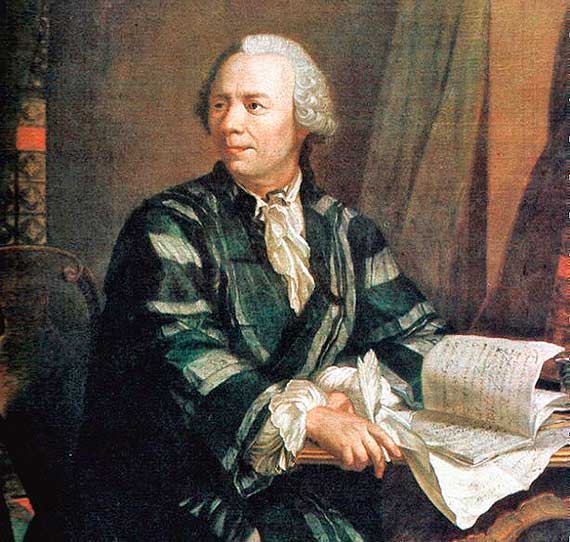
Leonhard Euler portrayed by Jakob Emanuel Handmann circa 1756. Source: Deutsches Museum, Munich
17 terms in a series, as the results of the two operations differed in
the fiftieth decimal place. Without a pencil or slate, Euler computed
the correct result in his mind in a few seconds. The anecdote was
referred to by his contemporary and colleague, the Frenchman Nicolas de
Condorcet, who at Euler’s death wrote a lengthy eulogy to “one of the
greatest and most extraordinary men that Nature ever produced.”
Curiously, that genius might have been lost to mathematics if Euler
had followed in the footsteps of his father to serve as pastor of the
Reformed Church, as planned. The advice of the mathematician Johann
Bernoulli, a friend of the family, was key in directing Euler’s
footsteps definitively towards mathematics and science.
Precocious in his studies and in his career, he soon began to stand out, which led him to travel to occupy prestigious positions in the Academies of Saint Petersburg and Berlin.
The most prolific mathematician in history was not only the main
founder of what we now know as classical mathematics, exploring a wide
variety of fields and introducing much of the notation used today, but
he also explored other disciplines such as astronomy, optics,
engineering, magnetism, ballistics, navigation, shipbuilding, philosophy
and music. It is said that his musical theory did not triumph because
it was too advanced in mathematical computations for musicians, and too
musical for mathematicians.
A Gift for Dissemination
Euler was also endowed with a gift for dissemination, without havingdedicated himself professionally to teaching. Proof of this is the
publication that was a best seller in its time—Letters to a German Princess, On Different Subjects in Physics and of Philosophy,
a work in three volumes that began to be published in 1768 and that
collects the letters written by Euler to his pupil, Friederike Charlotte
of Brandenburg-Schwedt, princess of Anhalt-Dessau and niece of the King
of Prussia Federico the Great.
The famous Goldbach Conjecture first appeared in a letter addressed to Euler by Christian Goldbach. Source: Departament of Mathematics and Statistics – Dalhousie University
Goldbach Conjecture, one of the oldest yet unsolved mathematical
problems, first appeared in 1742 in a letter addressed to Euler by the
German mathematician Christian Goldbach, his friend since they met each
other at the St. Petersburg Academy.
It was in this Russian city that, on September 18, 1783, Euler was
calculating the ascent of hot air balloons—which at that time were
causing a furore in Europe—and argued over dinner with his colleague
Anders Johan Lexell about the orbit of the newly discovered planet
Uranus. As Condorcet wrote, it was later, while drinking tea and playing
with his grandson, when “all of a sudden the pipe that he was smoking
slipped from his hand and he ceased to calculate and live.”
Javier Yanes
Τετάρτη 23 Αυγούστου 2017
Παρασκευή 7 Ιουλίου 2017
Women in Maths - Δημοσιεύσεις
Women in Maths - Δημοσιεύσεις

Claire
Voisin (Professor at Collège de France, member of the
Académie des Sciences, Paris, recipient of CNRS Gold medal
2016):``... I would not say that I chose math as a career; I got
interested, so I started, then I continued and it was a sort of
addiction. I never really 'thought' of doing this, it's like
this was simply obvious and also the easiest way. How can I say;
once I started seriously doing maths, there was no alternative. I
got used to it, I had to do this. Since I started, I never wanted to
do something different. I would even say I find it more and more
interesting over time...
The fact is that my family did
not care so much, because I come from a very large family: I have
eight sisters and three brothers. My parents were very happy if we
were independent and earned money. I left my family's home when I
was 17, I got a scholarship and, starting from this point, I
never had to ask money from my parents. I should say that when I
was a child I had some contacts with maths, especially geometry, but
my parents did not care so much about our future careers; if I
had been a teacher in high school they would have been happy.
...What is hard are the moments when you lack inspiration to formulate
new ideas, new problems. Also sometimes it happened that I did
some research which was unsuccessful. It is important to be able to stop
something which does not work, not to spend too much time and
energy on an idea that you drive by force. You need to change. I
always found travelling very useful for this, because if you are alone
you tend to stay stuck on a subject, while if you travel you
get some distance and you can try something new, a new subject,
your mind has a new drive, a new energy.
...I had excellent
working conditions, because I had no teaching, I could teach
only when I wanted to, and in high level courses. I had a CNRS
position, so I was able to work at home, no time and energy
wasted in public transportation. Life was made very easy by my CNRS
position; and you know the French system of child care, so I had no
excuse for not working full-time. I should mention that what made
my life so very easy is that my husband is also a
mathematician, so not only the every day schedule is much softer, but
we understood both that we needed time for us. At the weekends,
I used to work in the morning and he in the afternoon. That
was nice, we both agreed that we should do things this way.
...I
like very much the moment I start a new research, I like
very much the moment I have something in my mind: sometimes it
is barely an idea, sometimes it's just the beginning of
something. But there is this quality of the dream, and the fact
that your mind works alone, you do not need to force it.
I also
like to give talks; this is a bit different, but I like it very much. I
have to challenge myself to discuss, because I am what in
French we call ’introvertie’. There is a lot of introversion
in our work, because we are contemplating something. But there
is also a part of our work that is different, discussing,
giving talks, attending conferences, which is also nice. Still, for
me, the very nice part of my job is when I work on something new by
myself.
The bad part....there is some bad part, some
suffering, when you are trying to do something which is
difficult. There are some moments when you spend much energy,
and moments in which the dynamics of research is a little
lost. You don’t feel you are inside of mathematics. But I am afraid this
is especially bad for my family....''
This is a short extract from an interview with Claire by the EWM. For the full interview (worth reading!), please see
http://europeanwomeninmaths.org/…/newsletters/675/newslette…
Voisin (Professor at Collège de France, member of the
Académie des Sciences, Paris, recipient of CNRS Gold medal
2016):``... I would not say that I chose math as a career; I got
interested, so I started, then I continued and it was a sort of
addiction. I never really 'thought' of doing this, it's like
this was simply obvious and also the easiest way. How can I say;
once I started seriously doing maths, there was no alternative. I
got used to it, I had to do this. Since I started, I never wanted to
do something different. I would even say I find it more and more
interesting over time...
The fact is that my family did
not care so much, because I come from a very large family: I have
eight sisters and three brothers. My parents were very happy if we
were independent and earned money. I left my family's home when I
was 17, I got a scholarship and, starting from this point, I
never had to ask money from my parents. I should say that when I
was a child I had some contacts with maths, especially geometry, but
my parents did not care so much about our future careers; if I
had been a teacher in high school they would have been happy.
...What is hard are the moments when you lack inspiration to formulate
new ideas, new problems. Also sometimes it happened that I did
some research which was unsuccessful. It is important to be able to stop
something which does not work, not to spend too much time and
energy on an idea that you drive by force. You need to change. I
always found travelling very useful for this, because if you are alone
you tend to stay stuck on a subject, while if you travel you
get some distance and you can try something new, a new subject,
your mind has a new drive, a new energy.
...I had excellent
working conditions, because I had no teaching, I could teach
only when I wanted to, and in high level courses. I had a CNRS
position, so I was able to work at home, no time and energy
wasted in public transportation. Life was made very easy by my CNRS
position; and you know the French system of child care, so I had no
excuse for not working full-time. I should mention that what made
my life so very easy is that my husband is also a
mathematician, so not only the every day schedule is much softer, but
we understood both that we needed time for us. At the weekends,
I used to work in the morning and he in the afternoon. That
was nice, we both agreed that we should do things this way.
...I
like very much the moment I start a new research, I like
very much the moment I have something in my mind: sometimes it
is barely an idea, sometimes it's just the beginning of
something. But there is this quality of the dream, and the fact
that your mind works alone, you do not need to force it.
I also
like to give talks; this is a bit different, but I like it very much. I
have to challenge myself to discuss, because I am what in
French we call ’introvertie’. There is a lot of introversion
in our work, because we are contemplating something. But there
is also a part of our work that is different, discussing,
giving talks, attending conferences, which is also nice. Still, for
me, the very nice part of my job is when I work on something new by
myself.
The bad part....there is some bad part, some
suffering, when you are trying to do something which is
difficult. There are some moments when you spend much energy,
and moments in which the dynamics of research is a little
lost. You don’t feel you are inside of mathematics. But I am afraid this
is especially bad for my family....''
This is a short extract from an interview with Claire by the EWM. For the full interview (worth reading!), please see
http://europeanwomeninmaths.org/…/newsletters/675/newslette…

Εγγραφή σε:
Αναρτήσεις (Atom)