Στη συνέχεια των δημοσιευμάτων που αφορούν τις κορυφαίες διακρίσεις
στον τομέα των μαθηματικών, και ανακοινώθηκαν πριν από λίγο καιρό στην
τελετή της Διεθνούς Μαθηματικής Ένωσης στο Ελσίνκι της Φινλανδίας,
αξίζει να αναφέρουμε τη σημαντική διάκριση που δόθηκε σε μία ξεχωριστή
προσωπικότητα της μαθηματικής επιστήμης. Πρόκειται για την απονομή του
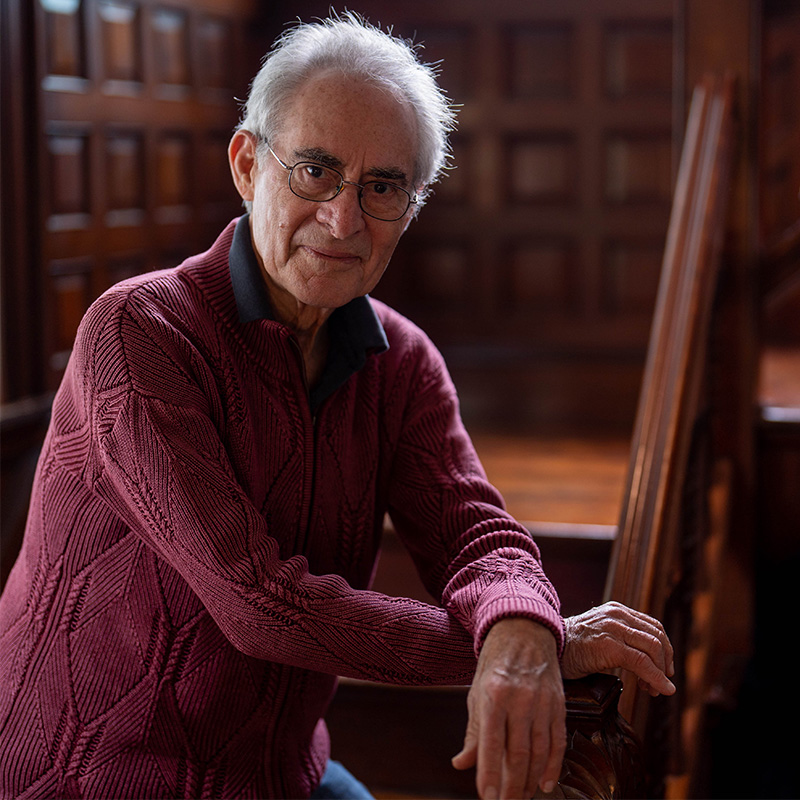
φετινού Μεταλλίου Chern στον Αμερικανό μαθηματικό του Πανεπιστημίου του Χάρβαρντ, BarryMazur. Το Μετάλλιο Chern
απονέμεται κάθε τέσσερα χρόνια στο διεθνές συνέδριο της ICM, «σε ένα
άτομο του οποίου τα εξέχοντα επιτεύγματα δικαιούνται το υψηλότερο
επίπεδο αναγνώρισης στον τομέα των μαθηματικών».
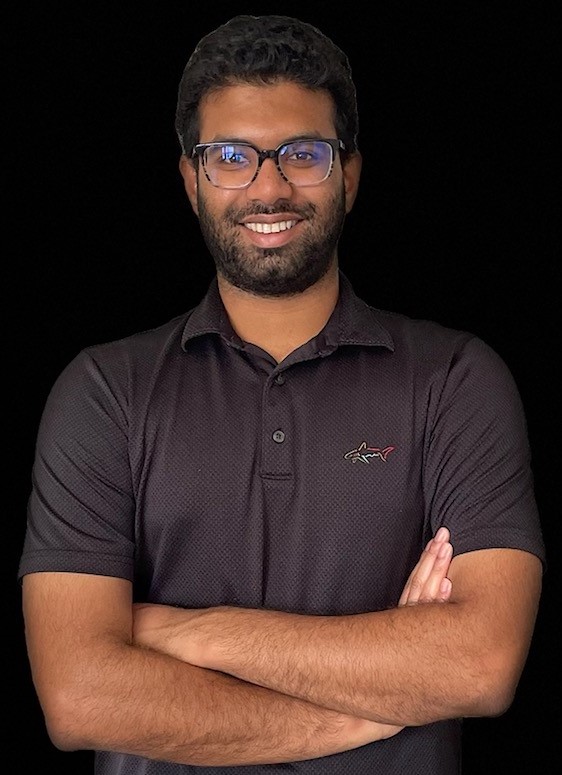
Anuraag Bukkuri,
a PhD student in integrated mathematical oncology at the University of
South Florida and Moffitt Cancer Center, will be the 2022 AMS Mass Media
Fellow. He will spend 10 weeks this summer as a journalist for The Miami Herald, reporting on science and related topics.
Anuraag Bukkuri
Credit: Anuraag Bukkuri
In his research, Bukkuri applies perspectives from mathematics,
ecology, evolution, and Earth history to cancer therapies. He studied
mathematics as an undergraduate at Dartmouth College and the University
of Minnesota. Growing up, he wrote short stories and poems, but his
interests in science and writing did not overlap at first.
"In more recent years is when I saw a big gap in the mathematical
field for bringing our ideas, our passion for math, [and] the
applications of math in the real world to the public,” Bukkuri said. In
an article appearing in The Conversation last year, he described how evolutionary game theory could improve cancer treatment.
COVID-19, climate change, rising sea levels, the Everglades—all these
scientific topics matter to the people of South Florida, Bukkuri said.
He is looking forward to talking with local experts and using his
training as a mathematician to write for Herald readers in a clear and methodical style.
Bukkuri is one of 28 fellows who will be embedded in newsrooms across
the country this summer. “To join this group of truly distinguished
people—not only in my cohort, but for decades—is truly an honor, and I
hope to be able to learn from everyone over the years to come." After
the fellowship, Bukkuri plans to pursue an academic research career
while continuing to write.
About the Fellowship
Organized by the American Association for the Advancement of Science (AAAS), the Mass Media Science and Engineering Fellowship
program improves public understanding of science and technology by
placing advanced undergraduate, graduate, and postgraduate science,
mathematics, and engineering students in media outlets nationwide.
Fellows work for 10 weeks over the summer as reporters, researchers, and
production assistants alongside media professionals to sharpen their
communication skills and increase their understanding of the editorial
process by which events and ideas become news. Now in its 47th year, the
fellowship program counts over 750 scientists and science communicators
as alumni. The AMS has sponsored a Mass Media Fellow most years since
1997.
The American Mathematical Society is dedicated to advancing
research and connecting the diverse global mathematical community
through our publications, meetings and conferences, MathSciNet,
professional services, advocacy, and awareness programs.
Ανακοινώθηκε και φέτος η απονομή του Βραβείου Άμπελ, που γίνεται κάθε χρόνο από τη Νορβηγική Ακαδημία Επιστημών και Γραμμάτων.
Αποδέκτης
του βραβείου για το 2022 είναι ο Dennis Parnell Sullivan από το
Πολιτειακό Πανεπιστήμιο της Νέας Υόρκης στο Στόνι Μπρουκ, "για τις
πρωτοποριακές συνεισφορές του στην Τοπολογία με την ευρεία της έννοια
και συγκεκριμένα τις αλγεβρικές, γεωμετρικές και δυναμικές πτυχές της".
Richard P. Stanley,
an emeritus professor of mathematics at the Massachusetts Institute of
Technology, will receive the 2022 AMS Leroy P. Steele Prize for Lifetime
Achievement. Stanley has revolutionized enumerative combinatorics,
revealing deep connections with other branches of mathematics, such as
commutative algebra, topology, algebraic geometry, probability, convex
geometry, and representation theory. In doing so, he solved important
longstanding combinatorial problems, often reinvigorating these other
fields with new combinatorial methods. Through his outstanding research;
excellent expository works; and many PhD students, collaborators and
colleagues, he continues to influence the field of combinatorics
worldwide.
Richard P. StanleyCredit: Atsuko Kida
Response of Richard P. Stanley
It is a wonderful honor to receive the Leroy P. Steele Prize for
Lifetime Achievement. When I started working in enumerative and
algebraic combinatorics around 1967, I was greatly attracted to the
vision of my thesis adviser Gian-Carlo Rota (recipient of a 1988 Steele
Prize), who saw glimmerings of deep connections between combinatorics
and other branches of mathematics. In graduate school, I became
interested in partially ordered sets and symmetric functions. They
fortunately turned out to be extremely fecund concepts which continue to
fascinate me. I have described elsewhere how the problem raised by
MacMahon of enumerating solid (3-dimensional) partitions eventually led
me to find connections with convex polytopes, commutative algebra, and
algebraic geometry, leading to the solution of a number of problems,
such as the Upper Bound Conjecture for Spheres and the g-conjecture
for simplicial polytopes, having nothing to do with solid partitions.
It is interesting how the path to successful research can be so
circuitous.
Throughout my career it has been gratifying to see many highly
talented aspiring mathematicians decide to work in algebraic and
enumerative combinatorics. Thanks to their efforts, the field has become
vastly more sophisticated and intertwined with other areas than when I
began my own research. This Steele Prize should be regarded not only as
an individual honor, but also as a testament to the efforts of these
other researchers who have raised algebraic and enumerative
combinatorics to its present lofty level. I should also express my
gratitude to the MIT Department of Mathematics for providing a
stimulating and nurturing environment for learning, discovering, and
teaching mathematics.
Biographical Sketch of Richard P. Stanley
Richard P. Stanley attended the California Institute of Technology as
an undergraduate and received his PhD from Harvard University in 1971.
He originally planned to work in algebra or number theory, but under the
spell of Gian-Carlo Rota, he switched his main research interest to
combinatorics. After postdocs at MIT and UC Berkeley, Stanley returned
in 1973 to MIT, where he remained until retiring in 2018. He continues
as an Arts and Sciences Distinguished Professor at the University of
Miami during spring semesters. He especially likes connections between
combinatorics and other branches of mathematics.
Stanley is a member of the American Academy of Art and Sciences and
the National Academy of Sciences and a Fellow of the AMS. He was a
plenary speaker at the ICM in 2006 and gave the AMS Colloquium Lectures
in 2010. He received the SIAM George Pólya Prize in Combinatorics in
1975, the Steele Prize for Mathematical Exposition in 2001, and the Rolf
Schock Prize in Mathematics in 2003. Sixty students received their PhDs
under his supervision. In addition to these mathematical progeny, he
has two biological children and two grandchildren.
About the Award
Presented annually, the AMS Leroy P. Steele Prize for Lifetime
Achievement is awarded for the cumulative influence of the total
mathematical work of the recipient, high level of research over a period
of time, particular influence on the development of a field, and
influence on mathematics through PhD students. The Steele Prizes were
established in 1970 in honor of George David Birkhoff, William Fogg
Osgood, and William Caspar Graustein, and are endowed under the terms of
a bequest from Leroy P. Steele.
αν σήμερα,το 1914 γεννιέται ο μαθηματικός George Bernard Dantzig.
Γεννήθηκε στο Πόρτλαντ του Όρεγκον.Οι γονείς του,τον ονόμασαν George Bernard προς τιμή του Τζορτζ Μπερνάρντ Σω, του Ιρλανδού συγγραφέα. Ο πατέρας του Tobias Dantzig ήταν Γερμανός μαθηματικός και γλωσσολόγος της Βαλτικής και η μητέρα του, Anja Dantzig Γαλλίδα γλωσσολόγος.O George Bernard Dantzig υπήρξε μαθηματικός διαμετρήματος με περγαμηνές στην στατιστική, στην επιστήμη των υπολογιστών, την οικονομική επιστήμη αλλά κυρίως στην επιχειρησιακή έρευνα. Γνωστός για την εργασία του στο γραμμικό προγραμματισμό και ειδικότερα για την δημιουργία του αλγορίθμου Simplex, ενός αλγόριθμου για την επίλυση προβλημάτων γραμμικού προγραμματισμού.
Το 1939, ενώ ήταν μεταπτυχιακός φοιτητής στο Berkeley πρωταγωνίστησε στο εξής περιστατικό. Καθυστερεί σε ένα μάθημα, όταν φτάνει,ο καθηγητής Jerzy Neyman είχε ήδη γράψει στον πίνακα δυο προβλήματα στατιστικής, ο Dantzig υποθέτει ότι τα προβλήματα ήταν μια εργασία στο σπίτι και τα σημειώνει. Η αλήθεια είναι ότι τα προβλήματα όπως ο ίδιος μετέπειτα έλεγε «φάνηκαν να είναι λίγο πιο δύσκολα από το συνηθισμένο», αλλά λίγες μέρες αργότερα έδωσε ολοκληρωμένες λύσεις και τις παρέδωσε όπως πίστευε καθυστερημένα στον Neyman.
Έξι εβδομάδες αργότερα,πρωί,κάποιος χτυπούσε μετ’ επιτάσεως την πόρτα του Dantzig,όταν άνοιξε την πόρτα είδε ένα κατενθουσιασμένο καθηγητή Neyman,ο οποίος του είπε ότι τα προβλήματα που είχε λύσει ήταν δύο από τα πιο διάσημα άλυτα προβλήματα στην στατιστική.Είχε προετοιμάσει μία από τις λύσεις του για δημοσίευση σε ένα μαθηματικό περιοδικό.Όπως είπε ο Dantzig σε μια συνέντευξη του 1986,στο Journal College Mathematics: Ένα χρόνο αργότερα,όταν άρχισα να ανησυχώ για το ποιο πρέπει να είναι το θέμα της διατριβής μου,ο Neyman απλώς σηκώθηκε και μου είπε να ολοκληρώσω τα δύο προβλήματα να τα συρράψω και θα τα δεχόταν την διατριβή μου.
Αυτή η ιστορία άρχισε να εξαπλώνεται και πήρε διαστάσεις με το όνομα του Dantzig σιγά-σιγά να αφαιρείται και τα γεγονότα να αλλάζουν, αλλά η βασική ιστορία παραμένει με τη μορφή αστικού μύθου και έμπνευση για την εισαγωγική σκηνή στην εξαίρετη ταινία Good Will Hunting